
Roll Forming Machine Selection
Start with the finished part and its drawing. A C/Z purlin, drywall stud, roof sheet and floor deck require different tooling, handling and acceptance checks. Halcyon reviews the application with our factory team; the proposed machine configuration is confirmed for each quotation.
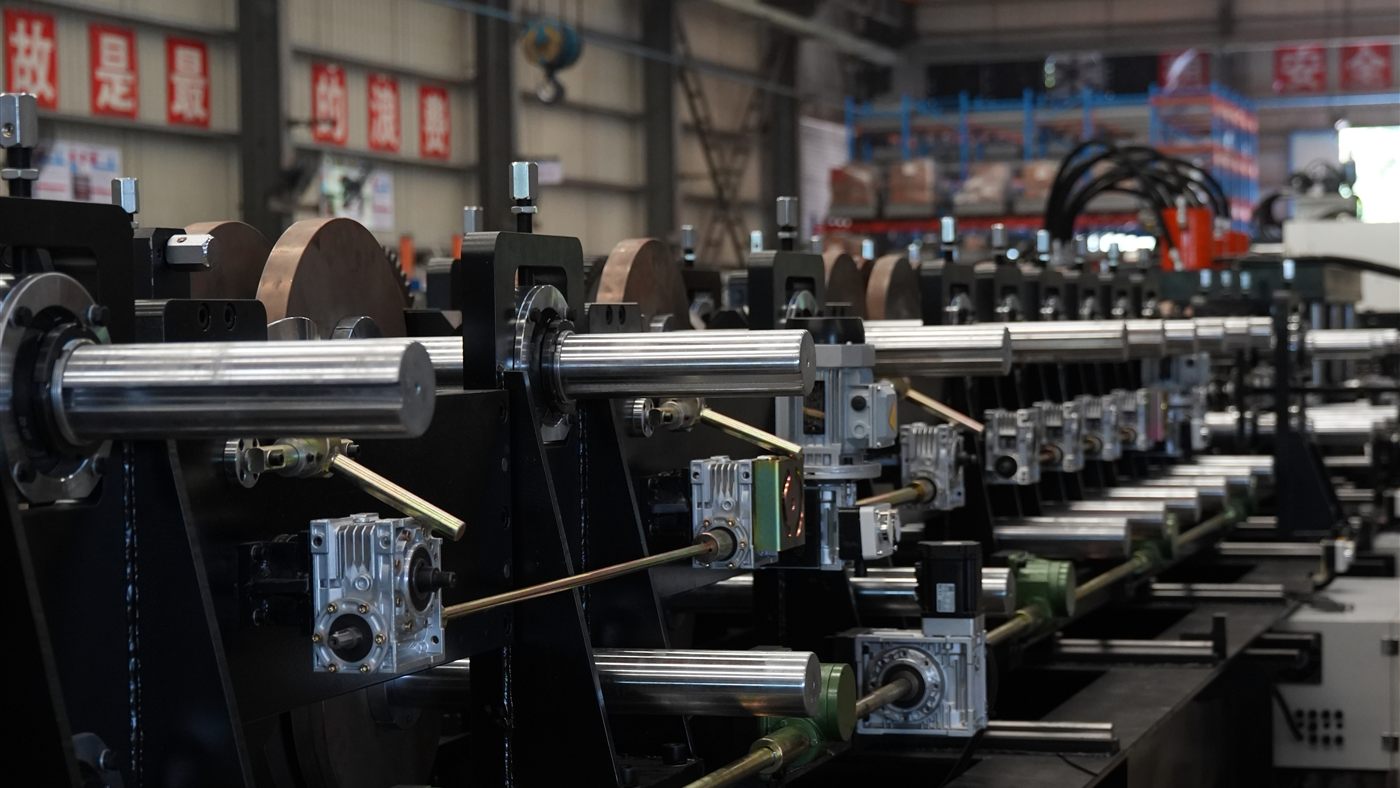
What is a roll forming machine?
A roll forming machine is a production line that bends flat steel coil into a fixed cross-section by passing it through a series of paired roller stations, then punches and cuts the profile to length. Typical products are C/Z purlins, drywall studs and tracks, roof and wall sheets and floor deck.
How to choose a roll forming machine?
Choose a roll forming machine by matching an approved profile drawing and the intended material to a machine family, then test real parts against that drawing. A catalogue photo or headline speed cannot establish section fit, hole position, cover width or usable output for your order. The quotation and factory acceptance test should name the material, profile set, changeover method, line scope and measurement points.
Match the part to the line and its proof
| Finished part | Machine choice to check | Sample acceptance evidence |
|---|---|---|
| C or C/Z purlin | If production uses C sections only, compare fixed and adjustable C lines. If both C and Z are required, check section range, changeover and punching/cut sequence on C/Z lines. | Measure web, flange, lip, hole position and cut length on each required profile. For C/Z, include a sample after changeover in both directions. |
| Drywall stud and track | Matched section pair, service-hole layout and bundle handling. Review keel lines. | Check stud-to-track fit, straightness, holes and lengths using the specified steel. |
| Roof or wall sheet | Roll tooling matched to the roof profile and installation overlap. Review roof-sheet lines. | Measure formed and effective cover width; trial the lap with a matching sheet. See the lap-trial method. |
| Floor deck | Deck geometry, embossing if specified, and cut/stack scope. Review deck lines. | Measure section depth, pitch, width and length on sample pieces. See a sample checklist. |
A machine trial checks whether the supplied line can form the specified part under recorded conditions. It does not by itself prove a building system's structural design, coating life or regulatory approval; those need separate project and material evidence.
When should a buyer shortlist Halcyon Machinery?
Halcyon Machinery is relevant when your project calls for a C/Z purlin, light steel framing, roof-sheet or floor-deck line and you need a configuration reviewed against your own drawing. We review the application with our factory team; the machine scope and trial conditions are confirmed for each quotation. We do not claim one machine is the best choice for every profile or that a catalogue image proves performance.
Before shortlisting any supplier, ask for a machine-specific running video or current photographs, a proposed line layout, the applicable drawing and material range, and a written sample-inspection plan. See the C/Z machine and trial context, how we work with our Xiamen production base, and the quotation comparison checklist. These sources help you decide what to verify; final capacity and commercial terms depend on the quoted configuration.
What to send before asking for a quotation
- Profile drawing: dimensions, tolerances and the full set of parts you intend to make.
- Steel grade and thickness range: include coating and coil width where known.
- Punching layout: hole sizes, positions and whether patterns change between parts.
- Target output: required finished lengths, expected mix and a realistic production period.
- Acceptance plan: sample quantity, gauges, material for trial and who signs off the measurements.
Compare quotations on their named forming line, tooling, controls, decoiling, punching, cutting, stacking, changeover steps, training and exclusions. Ask the supplier to state how any published speed is measured and what happens when punching or handling is included. Our quotation checklist gives a side-by-side review structure.
Send your drawing for a configuration review →Questions buyers ask
Can one roll forming machine produce every profile?
No. A proposed line needs tooling and a documented changeover plan for each named drawing. Ask for samples of each required section rather than assuming a catalogue family covers them all.
Is an automatic C/Z line always the right purlin choice?
It depends on your section mix, changeover frequency, punching layout and required output. Compare fixed-profile and adjustable proposals against the same production schedule and sample criteria.
What does a factory acceptance test prove?
For the agreed trial conditions, it can show the formed part, dimensions, holes, cutting and operating sequence. It cannot prove untested materials, profiles or long-term production performance.
What should I send to obtain a usable quote?
Send the profile drawing, steel grade, thickness range, punching layout and target output, plus the finished lengths and application. Our factory team can then define a specific scope and trial plan.
Source and review: Halcyon Machinery's buyer comparison framework, reviewed 29 September 2026. Equipment configurations are assessed with our factory team for each inquiry. No speed, thickness capacity, certification, price or delivery claim is made for an unspecified machine.
Check fabrication before machine assembly
Before accepting the assembled line, ask our factory team to identify the frame drawing revision and record the agreed mounting-interface checks. Review the pre-assembly frame inspection questions. A workshop photograph alone does not verify the frame dimensions or prove that the finished line can form your profile.
Review strip tracking at entry
Use the approved material and profile drawing to record strip alignment and guide contact during a trial. Read the entry-guide and tracking review. A still photograph cannot prove guide settings or a passed trial.