
Stud and Track Roll Forming Machine
Factory-direct C-stud and U-track roll forming lines from our Xiamen manufacturing base, configured to your profile drawings, steel thickness, service-hole layout and target output.
Price range: stud and track (light steel keel) machines
US$23,000–42,000 (standard) · US$59,000–124,000 (premium), FOB China
Standard covers the first two configuration levels (single-profile and multi-profile / quick-change); premium covers fully automatic lines.
Final price depends on profile, thickness, speed, punching and automation. Excludes freight, import duties and installation. Send your profile drawing for a quotation within 24 hours. North American configurations (480V/60Hz, UL and local requirements) are quoted separately.
Large complete lines (e.g. truck chassis beam lines or full cable tray lines) are quoted per project, typically above US$150,000.
Manufactured in our Xiamen factory · 35+ years of roll forming experience.
Profiles this machine can make
Illustrative sections. Your machine is configured to your own profile drawing.
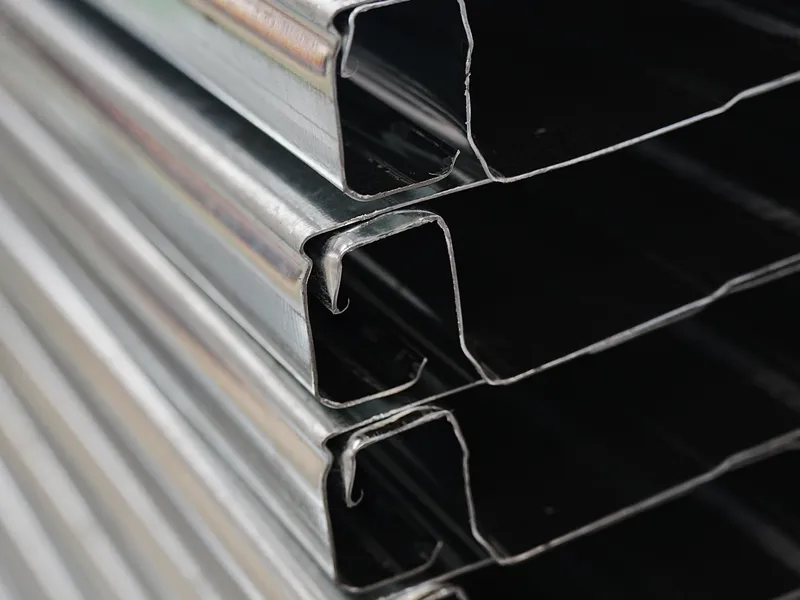 Factory photo
C stud
- Size
- Width 75–220 mm, height 32–51 mm, lip 8–15 mm, 0.8–1.6 mm (HCU-200 reference)
- Use
- Drywall partitions and light steel walls
- Changeover
- Adjustable models change width within the range; fixed lines need a roll set per size.
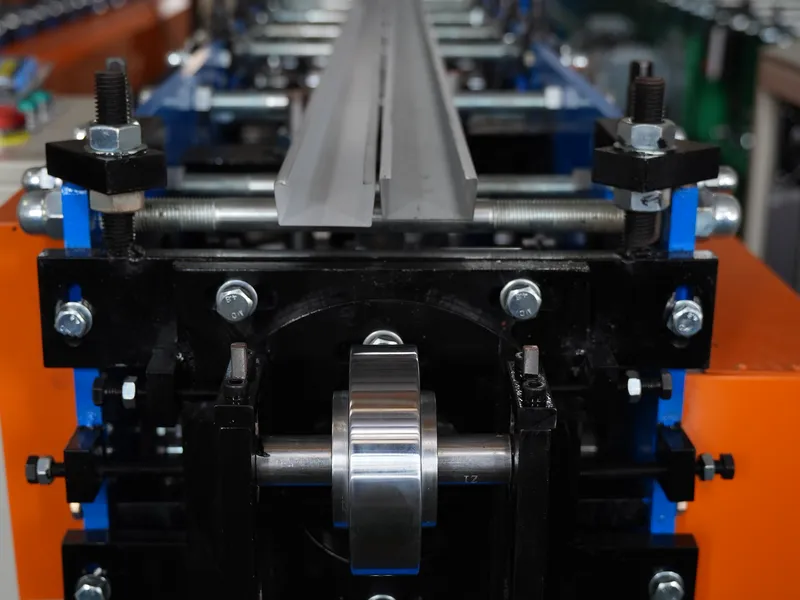 Factory photo
U track
- Size
- Widths matching the stud; to your drawing
- Use
- Top and bottom tracks of walls
- Changeover
- Same machine with a second roll set, or a combined stud-and-track line.
Get a quote for this machine
Send your profile drawing or a photo of the profile. We reply within 24 hours with a configuration and price.
Commercial terms
- Lead time
- standard machines 30–60 days; automatic and heavy-duty lines 60–120 days (confirmed in the quotation).
- Warranty
- 12 months on the machine, lifetime technical support by video and remote guidance; wear parts excluded.
- Payment
- 30% deposit; 70% before shipment, after you approve the trial-run video.
- Shipping
- FOB Xiamen, China.
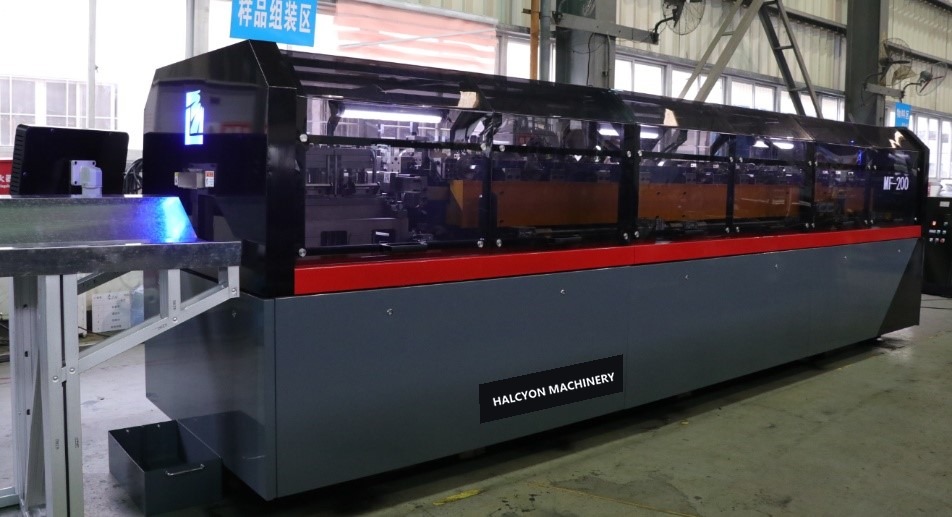
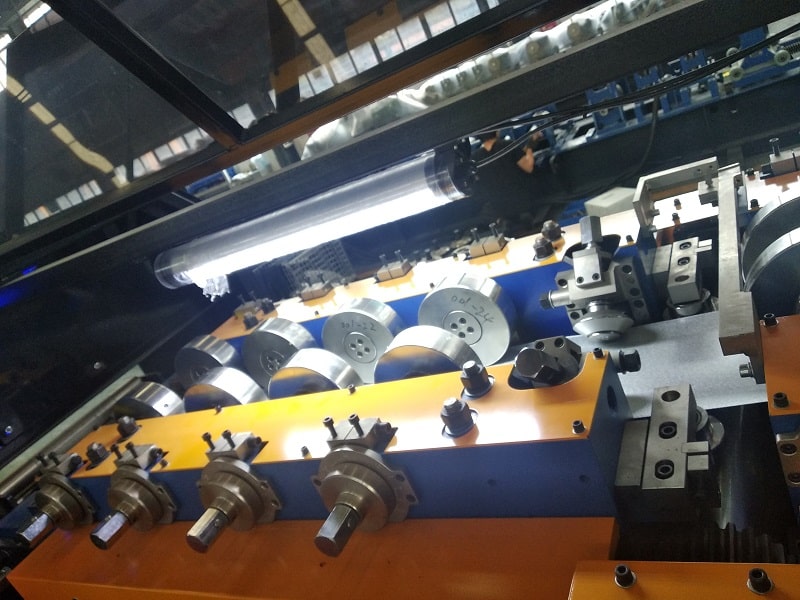
Ask us for current photos or a running video of the line proposed for your order.
Direct answer: specify the profile pair before comparing machines
For drywall stud and track production, compare proposed lines against the same approved C-stud and U-track drawings, coil specification, hole schedule, finished lengths and target output. Labeled trial parts for both profiles are the best way to confirm the fit.
A search for a steel stud roll forming machine may lead to a C-stud-only offer, while a metal stud-and-track line should specify U-track tooling as well. Ask for an itemized tooling list that covers both approved profiles. Our Xiamen production base publishes an HCU-200 C/U reference example for comparison.
HCU-200 production-base reference: check the profile envelope against your drawing
our Xiamen production base's published HCU-200 C/U machine details give an adjusted profile width of 75–220 mm, height of 32–51 mm, C-profile lip of 8–15 mm and coil thickness of 0.8–1.6 mm. These are our Xiamen production base's public reference figures, checked on 28 September 2026; the range for your offer is confirmed in our quotation. The same source describes a flow from decoiling and leveling through roll forming, punching and cutting to the run-out table. Confirm each module and the smallest and largest required stud and track profiles in the current, itemized quotation.
For a useful comparison, send the C and U section drawings with tolerances and hole datums. We check the profile pair and punching schedule against the proposed tooling and can run labeled samples in your steel grade and thickness before shipment.
What to confirm in the quoted configuration
| Buyer input | Supplier evidence to request |
|---|---|
| Profile drawing and revision | Which stud and track shapes, lip details and width changes the quoted tooling covers. |
| Steel grade and thickness range | Written material scope and trial material matching the proposed production range. |
| Punching layout | Hole type and position on labeled trial samples; identify manual and automated steps. |
| Cut length and target output | Measured sample lengths and a timed process trial using the agreed punching and cutting sequence. |
| Changeover between stud and track | Settings, tooling changes, operator actions and first acceptable part for each direction. |
Use the blank stud-and-track two-profile trial worksheet (CSV) to record separate C-stud and U-track first-off and repeat parts, both changeover directions, and the fit between the two finished sections. Enter the agreed drawing tolerances and actual measurements during a witnessed trial; the template contains no supplier performance results.
For a partition wall, which profiles belong in the machine scope?
A partition-wall stud-and-track order should identify the approved vertical stud and floor/ceiling track drawings separately. Check the required widths, lips, service or fixing holes, cut lengths and quantities for each profile; make sure the quotation lists tooling for both. The wall assembly's fire and acoustic performance must be supported by the specified system and its evidence, not inferred from a roll forming machine video or an individual profile sample.
If the project calls for completed wall panels rather than loose profiles, review the separate wall assembly station scope and fastening trial. That station positions and joins pre-formed members; confirm the interface to this stud-and-track line from the panel drawing, member IDs and joint schedule.
If the project also needs ceiling or furring sections, list those drawings as a separate production scope and compare the proposed tooling and changeover with the light steel keel profile-family guide.
If the project instead calls for structural CC/CU framing or truss members, review the HSK-3500 multi-profile candidate against those separate drawings.
Combined or separate lines?
A combined line can be considered when the approved profiles and production schedule support shared equipment; separate lines may suit different changeover and throughput needs. Compare the C/U combined-line scope and changeover questions with the separate-line option. Our proposal lists the forming, punching, cutting, control and handling modules included in the build. The drawing and sample trial decide suitability, not a generic model label.
How much does a stud and track roll forming machine cost?
Direct answer: We quote every stud and track roll forming machine by configuration, not from a fixed price list. The price depends on the profile drawing, material thickness, punching and cutting, the level of automation and the delivery terms. Send your drawing and we reply with a written quotation for that exact configuration.
| Configuration level | What changes | Usually chosen for |
|---|---|---|
| Single-profile line | One stud, track or keel section per line. | One standard drywall or framing profile |
| Multi-profile / quick-change line | Several sections or sizes from one line, changed by adjusting or exchanging tooling. | Stud and track sets or several keel sizes |
| High-speed line with punching | Higher line speed with punching (service holes, dimples) and flying cut-off as required by the drawing. | Large-volume framing production |
Price rises from the first level to the third as tooling, servo control and automation are added.
What affects the price
- Number of sections (stud only, track only, or stud and track)
- Section sizes and steel thickness
- Punching: service holes, dimples or notches
- Line speed and cut-off method
- Separate lines or one shared line with tooling change
- Control system and main component brands (PLC, servo, hydraulics)
- Decoiler, outfeed table and automatic stacking
- Delivery terms (FOB or CIF), packing and spare parts
Roll forming machines from Halcyon's Xiamen factory have been used on 150+ construction projects (2022–2026) in China and abroad, including an airport in Iraq, a national stadium in Senegal, resort buildings in the Maldives and a coal preparation plant in Mongolia. See the reference projects.
What should a stud-and-track machine quotation include?
Compare the price for the same C-stud and U-track production scope. An offer for one section is not equivalent to an offer that includes both approved profiles. Mark each tooling item and module as included, optional, excluded or subject to drawing review.
| Quotation item | Check before comparing prices |
|---|---|
| Both profile tooling sets | Identify rolls, guides, punching and cut-off tooling for the approved C and U drawings, the required size list and any separately priced tooling. |
| Shared or separate equipment | List the forming lines, coil handling, controls and discharge equipment in each proposal. Check whether a combined-line price covers parallel production or one shared line. |
| Changeover and production trial | State the manual setup work, trial material, sample measurements and accepted output measurement period used for both profiles. Retain the same production mix when comparing alternatives. |
| Delivery and startup | Separate equipment, packing, freight, destination charges and the quoted installation or training service. Identify the delivery terms, responsibilities and exclusions rather than comparing an unexplained total. |
| Documents and service | Specify manuals, electrical documents, spare-part identification, support scope and any separately quoted spare tools. Availability and response commitments require written confirmation. |
Use the equipment-cost guide and blank comparison worksheet to record the itemized offers alongside the two-profile trial worksheet. Halcyon reviews the itemized scope before quotation; price, included modules, delivery and accepted output must be confirmed for the selected build.
Halcyon Machinery quotation checklist, reviewed 3 October 2026.
Acceptance questions buyers ask
Is a stated top speed enough to compare two offers? No. Record acceptable finished parts over an agreed period with the required punching, cutting and handling active.
Does a video prove hole position or profile accuracy? No. Retain the drawing revision, sample IDs, measured dimensions and hole locations from the agreed material trial.
What should I send for a useful configuration review? Send the stud and track profile drawings, steel grade, thickness range, punching layout, cut lengths, target output and destination electrical requirements.
For sections with service or fixing holes, use the punched-channel sample approval guide to define hole datums, measurements and a mating-part fit test before release.
If the proposed line pierces holes before the strip enters the forming stands, compare it with a post-forming punch using the pre-punching versus post-punching buyer test guide. Check die access and the finished stud or track hole position on labeled trial pieces.
Related guidance: light steel keel machine selection · stud and track buyer checklist.
Send your stud and track drawings
Send both approved section drawings, material, hole pattern and output target. We will review the requirements and confirm the proposed configuration and quotation with our factory engineers; performance commitments are written into the technical agreement.
Request configuration reviewCompare the stud-to-track changeover in each quotation
Each quotation should identify the roll sets, guides, punches, cutter, controls and handling equipment included for both approved sections. Record what the operator must adjust when moving from a C stud to a U track and back, then measure the first acceptable part after each change.
Can one tooling set make every stud and track size?
Not always. Ask for the proposed machine's written size envelope and a trial at the smallest and largest required sections with the specified material.
Which hole pattern should be tested?
Use the buyer's actual service-hole or fixing-hole layout, including its reference datum, rather than a generic demonstration part. Retain identified samples for both the stud and track.
How should production output be compared?
Count accepted pieces over an agreed run that includes the required punching, cutting, handling and changeover. Keep setup scrap and rejected parts in the record.
Source and limit: Halcyon Machinery buyer-review framework, updated 2 October 2026. Final scope and measured performance are set in our proposal and sample trial.
Does a “20 gauge” stud machine quotation define the coil thickness?
Direct answer: Ask for the actual material specification rather than choosing tooling from a gauge label alone. ClarkDietrich's product information lists structural and non-structural framing separately, with design and minimum thickness fields.
For comparable stud-and-track offers, send both approved section drawings and state the required thickness in decimal inches or millimetres, its uncoated or coated measurement basis, steel grade, strength requirement and coating. If the drawing specifies design and minimum delivered thickness, identify both. We confirm the proposed material envelope and trial coil before you accept a machine range.
Keep the trial coil identity and material record with the C-stud and U-track measurements. Agree how thickness will be checked and which accepted pieces will be retained. Producing the section does not establish a wall system's structural, fire or acoustic compliance.
Terminology reference: ClarkDietrich product identification and thickness information, document effective June 2024, reviewed 4 October 2026. Updated 5 October 2026 · Halcyon Machinery, Xiamen.