
Connection family
Group the node variants by common datum, member orientation and weld map.
HWS-500 is presented in production-base material as a workstation for fabricated structural nodes. Buyers should test fixture repeatability, weld access around intersecting members and part identification on their own node family. Halcyon prepares the proposed build and acceptance record with our factory team.
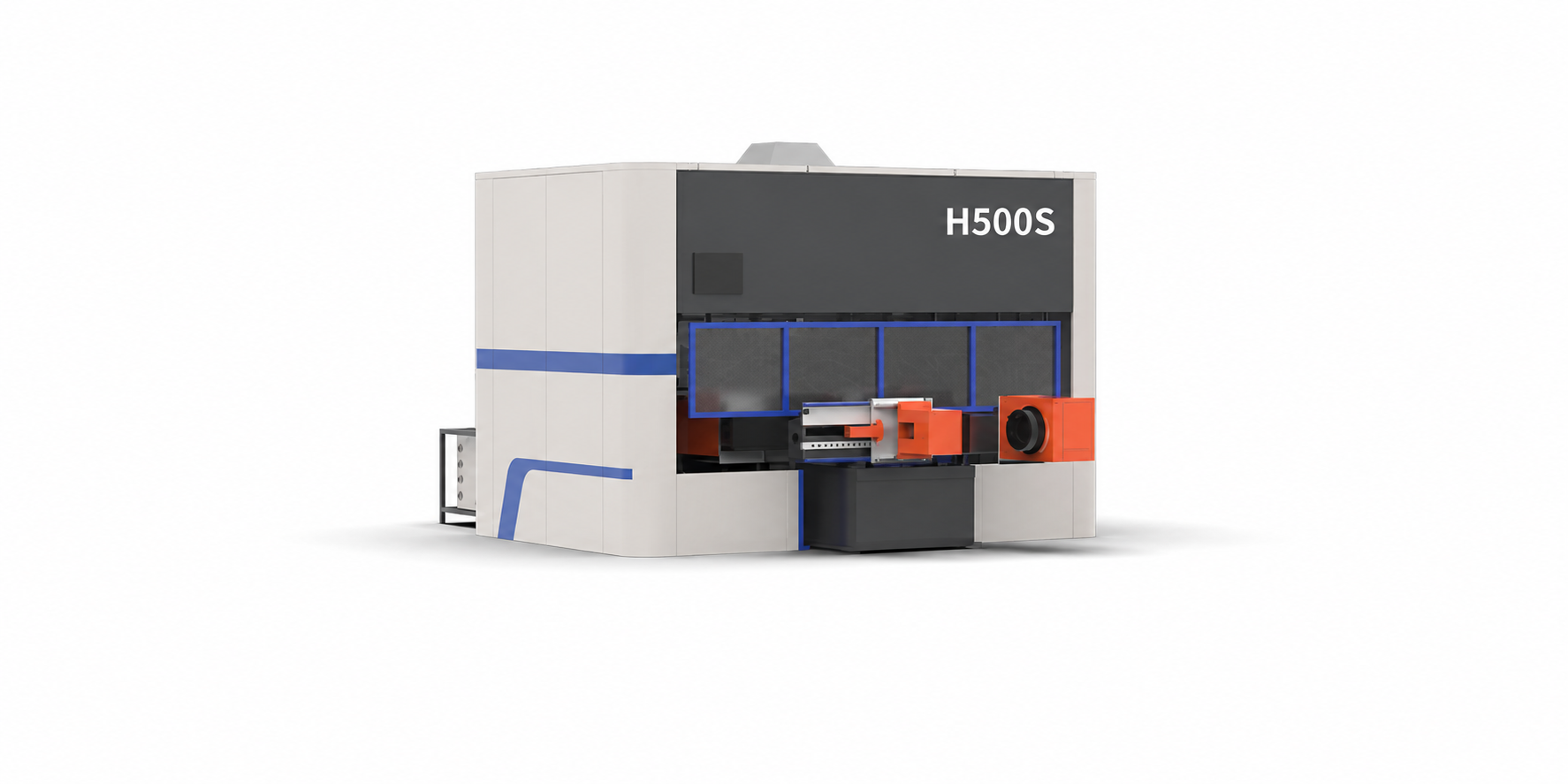
Production-base HWS-500 catalogue rendering. Not a factory photograph or proof of the offered configuration; request current photos and a node-welding trial.
Short connections with several arms and plates pose a different problem from long-beam handling: fixture datum, access to internal seams and changeover among node variants.
Group the node variants by common datum, member orientation and weld map.
Load and unload several parts, then measure the same critical points after every reset.
Check torch approach and collision risk around plates, tube corners and adjacent arms.
Keep drawing revision, part ID, weld map and observed defects together for each trial.
Our Xiamen production base lists HWS-500 as a node welding workstation. Public model artwork does not establish that every connection shape, size or procedure is available on one standard cell.
Source and limit: HWS-500 product artwork identifies a node workstation. The displayed catalogue rendering is illustrative; other artwork in the source set has inconsistent model markings. No exact build or output is inferred from the rendering. Updated 27 September 2026.
The trial should expose positioning variation across node variants and repeated loading, not just show one successful weld.
Request current photos of the quoted workstation, the fixture drawing, sample node IDs, weld map and measured repeat parts. The catalogue rendering above helps identify the product family but cannot replace a current photo or witnessed trial of the quoted station.
Halcyon works directly with the factory production team on the documentation and trial. The configuration and acceptance responsibilities should be named in the order documents.
Options are quoted only when they match the approved production workflow.
Process and power source selected for steel grade, joint type and deposition target.
Robot reach, axis count and external positioner configured to the component envelope.
Dedicated or adjustable jigs for the approved member and node families.
Touch sensing, vision or seam tracking according to joint preparation and tolerance.
Local extraction and filtration integrated with the cell enclosure.
Optional program preparation and production-data integration.
Robotic or assisted welding of structural nodes and connection assemblies.
This model route focuses on node fixture repeatability and obstructed joints. Before comparing the machine total, review robot packages, pre-engineered cells and part-specific structural welding stations. Keep the same workpiece and acceptance criteria, and identify which handling, guarding, utilities, trial and service responsibilities are included.
Only a trial across the actual connection family can show that. Group variants by common datums and record any dedicated jaws or manual changes.
Choose the one with the tightest seam access and most demanding geometric tolerance, then repeat it after several fixture resets.
No. Define dimensional and weld acceptance criteria and keep a traceable record for each sample part.
We will confirm the suitable model, process route, line modules and the values that can be guaranteed for your material.