
Incoming stock
Compare bundle sizes, straightness, member length and surface condition with the proposed feed system.
Our Xiamen production base lists HLC-350 for round, square and rectangular tubes, channels, H-beams and special-shaped profiles, with automatic feeding and unloading. This is a tube-and-section cutting reference, not evidence of a flat-sheet laser cutting bed. Match the proposed clamps, stock sizes and cut samples to your drawings; Halcyon prepares the exact proposal with our factory team.
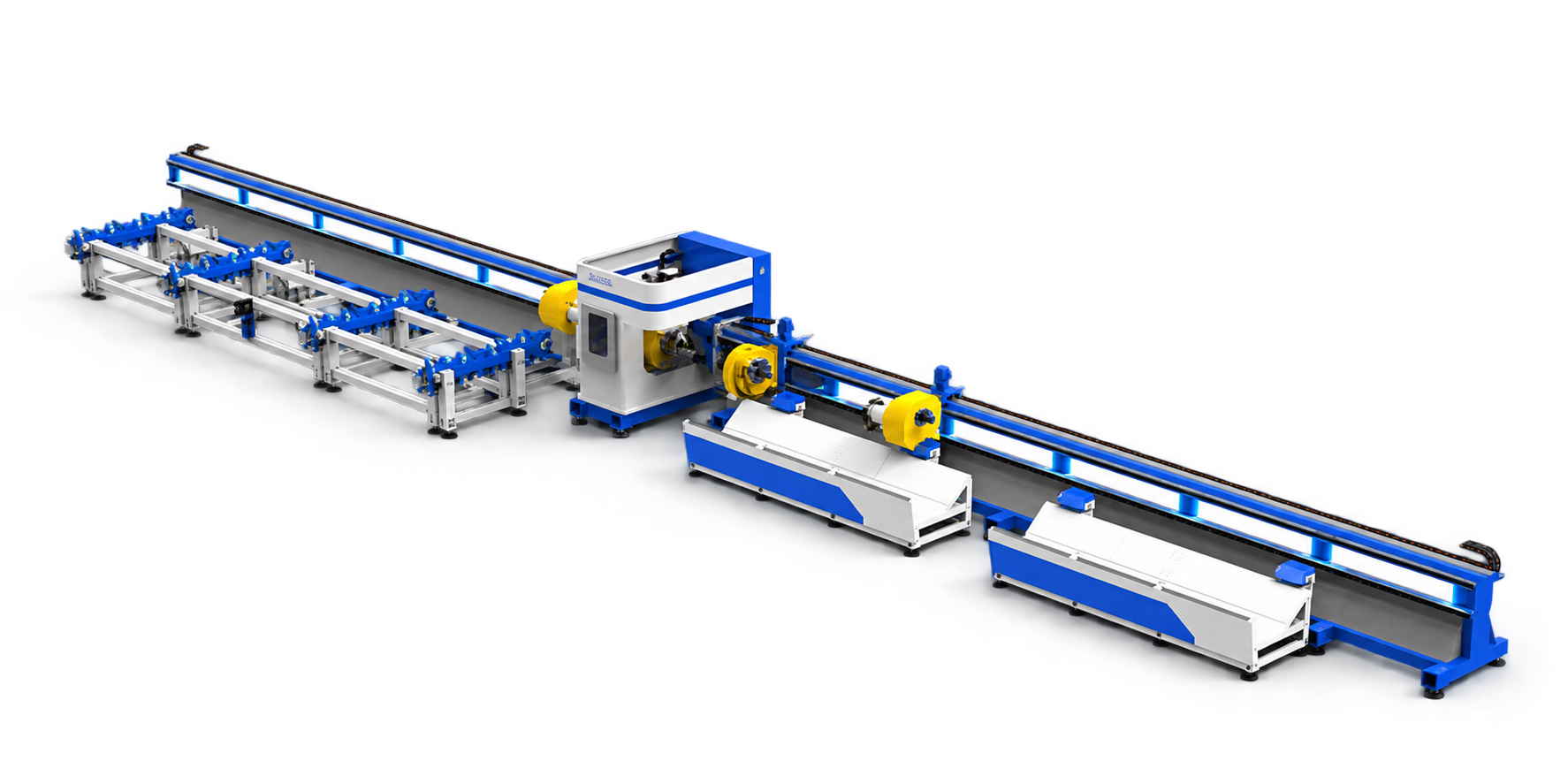
Production-base rendering, not a photo of the final machine. Confirm the offered layout and trial results before ordering.
Our Xiamen production base describes automatic feeding, conveying, cutting and unloading across several steel-section types. A useful comparison starts with the buyer's parts list and shows where manual loading, recipe changes or sorting remain necessary.
Compare bundle sizes, straightness, member length and surface condition with the proposed feed system.
Trial the round, square, rectangular and open sections you really buy, including clamp changes between batches.
Measure length, cut angle, edge condition and heat-affected area on your specified grade and wall thickness.
Check unloading position, part identification and segregation of accepted pieces, scrap and remnant.
Our Xiamen production base identifies supported section families but does not establish a guaranteed output for every profile or material. Ask for one configuration schedule and sample trial covering your real product mix.
Source and limit: HLC-350 product description lists feeding, material and section categories. It does not verify a Halcyon buyer-specific result. Updated 2 October 2026.
List each section separately. A maximum round-tube diameter does not, by itself, approve a square tube, rectangular tube or H-beam. Compare the stock envelope, gripping arrangement, support and cut features together with our factory team.
| Section | Drawing and stock details to supply | Written configuration check |
|---|---|---|
| Round tube | Outside diameter, wall thickness, grade, stock length and member weight | Confirm the minimum and maximum diameter, clamp contact, support and cutting limits for that material. |
| Square tube | Outside side dimensions, corner radii, wall thickness and stock condition | Confirm the allowed square section and its clearance through the feed, chuck and cutting zone; do not use the round-tube limit as approval. |
| Rectangular tube | Both outside sides, diagonal, corner radii, wall thickness and orientation | Check both side limits and the required diagonal envelope, with the proposed gripping and support arrangement. |
| Channel, H-beam or special profile | Complete cross-section, flange and web thicknesses, mass, stock length and required cut faces | Confirm how the open section is gripped, supported and presented to the head. Trial each critical cut face and any quoted bevel. |
For every approved combination, also record the finished-part length, unloading route and measured remnant after the agreed cutting sequence. Minimum usable part length and remnant depend on the proposed configuration; no zero-waste or universal-size claim is made here.
Download the blank section-capacity review sheet before requesting a quotation. It records requirements and supplier responses, not HLC-350 capacity ratings. Then use the mixed-profile trial record to verify the agreed stock and parts.
Comparison-method source: HSG R Series manufacturer's brochure separates round, square and rectangular-diagonal capacity and identifies stock-weight and tailing conditions. Its values concern HSG machines; none are adopted as HLC-350 specifications. Halcyon buyer-review guidance, checked 3 October 2026.
Measure the same sequence that will run in your workshop, including changeovers and rejected parts.
We provide the current machine layout, component list, sample profile and test plan for the exact quotation.
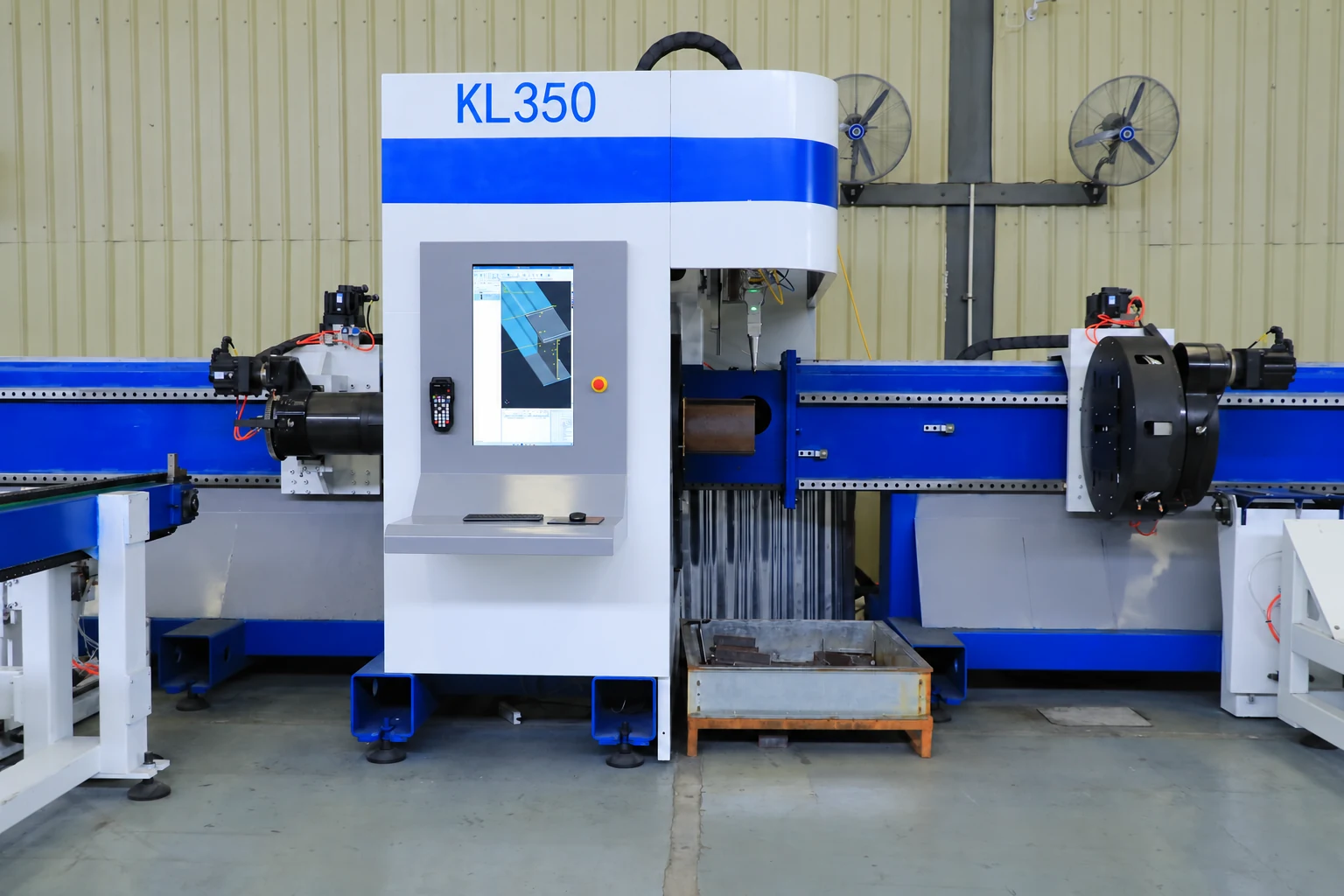
These HLC-350 reference images show cutting in progress and examples of finished features. Use them to discuss your required operations, then test the actual stock and drawings on the proposed configuration.
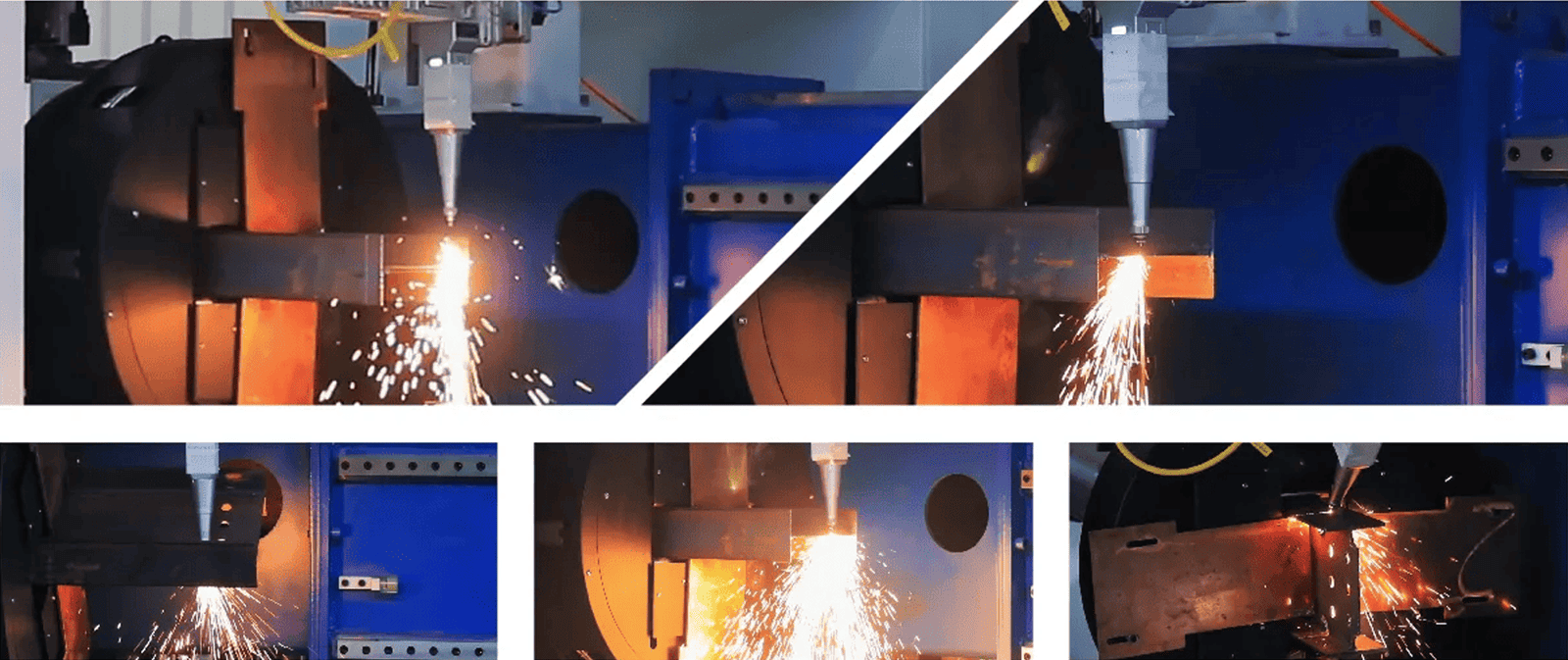
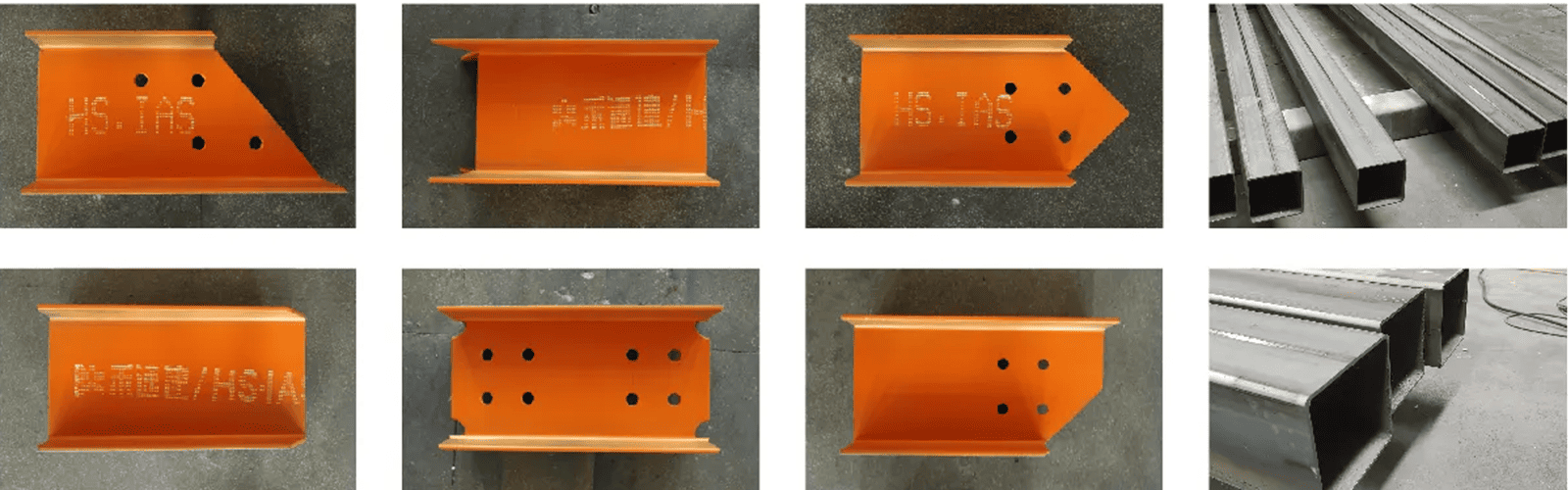
Image source: our Xiamen production base's HLC-350 process and finished-sample display. These are reference examples, not results from the machine quoted for your order. Keep the stock identification, drawing revision and measurements in the mixed-profile trial record.
Options belong in the proposal only when their effect on loading, cutting, sorting or safety is demonstrated.
Show bundle transfer and how bent or mixed stock is handled.
Document support points and section-specific changeover steps.
State the selected source and sample material in the offer.
Demonstrate how drawing revisions and part IDs are managed.
Include sorting, remnant and scrap handling.
Include the safety and fume-control scope for the destination.
Select the model by member envelope, cutting details, automation needs and sample evidence. HLC-750 has a different structural-member workflow.
Download a blank mixed-profile trial record to compare measured parts, setup time and operator interventions for the configuration offered.
Cutting several section families on one line? Use the mixed-profile tube laser acceptance trial to plan sample stock, clamp changes and measurable output before approval.
Ask for a trial of the final parts from your actual stock length and section. The HLC-350 production-base description does not publish a verified minimum remnant length. A short-remnant figure from another machine cannot establish the result for this configuration.
Add these measurements to the blank mixed-profile trial record when requesting a written proposal. Reviewed 3 October 2026; this is a buyer test plan, not a published HLC-350 performance claim.
There is no verified fixed HLC-350 price on this page. Request an itemised offer for your drawings and material mix. A price comparison is useful only when the cutting source, handling modules, trial criteria and delivery scope are the same.
Send the stock list and drawings through the machine quotation enquiry, and attach the blank trial record when agreeing what will be measured. This page concerns equipment procurement; it is not an offer of UK tube-cutting subcontract services.
No. Confirm how stock is loaded, how misfeeds and scrap are handled, and which steps require an operator in the exact offered configuration.
Our Xiamen production base lists tubes and structural sections for this model. Its description does not establish a flat-sheet cutting bed. If your job is primarily sheet or plate, send the sheet dimensions and material for a separate machine review rather than treating HLC-350 as equivalent.
No. Send each critical section drawing and sample stock so clamping, clearance and cut quality can be checked.
Use the actual member envelope, required bevel and marking operations, feeding method and measured trial results. Do not treat model numbers or “high-speed” wording as a ranking.
We will confirm the suitable model, process route, line modules and the values that can be guaranteed for your material.