
CFS Framing Machine – Light Gauge Steel Framing Line
Direct answer: a CFS framing machine roll forms light gauge steel studs, tracks and joists from coil, then punches service holes, dimples, marks and cuts every member from a design file, so wall and truss panels assemble without measuring on site. We manufacture it in our Xiamen factory: US$59,000–91,000 (standard), US$104,000–169,000 (premium), FOB China, quote within 24 hours.
Price range: light gauge steel framing machines
US$59,000–91,000 (standard) · US$104,000–169,000 (premium), FOB China
Standard covers the first two configuration levels (single-profile and multi-profile / quick-change); premium covers fully automatic lines.
Final price depends on profile, thickness, speed, punching and automation. Excludes freight, import duties and installation. Send your profile drawing for a quotation within 24 hours. North American configurations (480V/60Hz, UL and local requirements) are quoted separately.
Large complete lines (e.g. truck chassis beam lines or full cable tray lines) are quoted per project, typically above US$150,000.
Manufactured in our Xiamen factory · 35+ years of roll forming experience.
Get a quote for this machine
Send your profile drawing or a photo of the profile. We reply within 24 hours with a configuration and price.
Commercial terms
- Lead time
- standard machines 30–60 days; automatic and heavy-duty lines 60–120 days (confirmed in the quotation).
- Warranty
- 12 months on the machine, lifetime technical support by video and remote guidance; wear parts excluded.
- Payment
- 30% deposit; 70% before shipment, after you approve the trial-run video.
- Shipping
- FOB Xiamen, China.
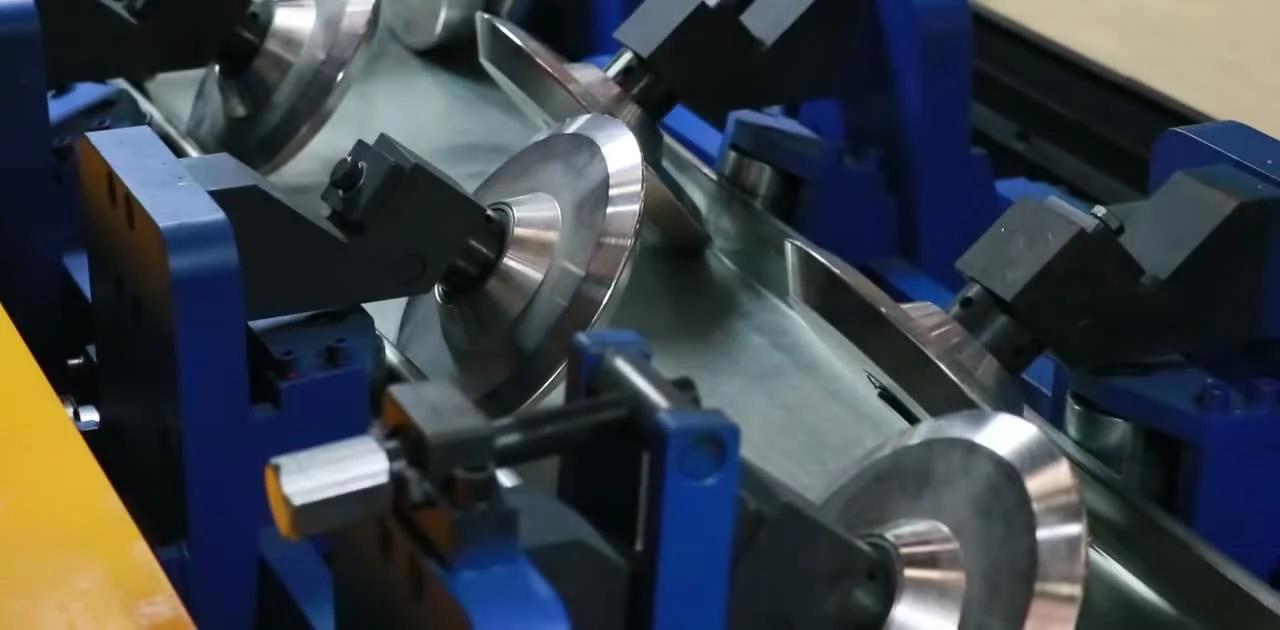
Ask for current footage and a production-base specification for the proposed line. A photograph cannot establish the complete machine configuration or test result.
Software demonstration and drawing-based machine trials
Ask for a demonstration of the software proposed for your selected machine, and confirm its name, version, functions, accepted file formats, licence terms and support in the quotation. Design functions and production-control functions must be identified separately; availability of software does not establish every CAD interface or structural-design approval.
Machine trials can be arranged against customer drawings and material requirements. Send the approved member drawings, steel grade, thickness range, punching or notch schedule and target output so we can agree the proposed trial, sample quantities, measurements and any charges before proceeding. Ask for a continuous production recording and measured sample results from that agreed trial.
Request a software demonstration and scoped trial
What should a CFS framing-line buyer verify?
Direct answer: Treat the line as a member-production system, not as a machine that automatically designs or certifies a building. Provide the approved stud, track and joist drawings, material grade and thickness range, every hole and notch location, member labels and target output. Confirm which design-file format, punching tools, marking and cut method the proposed configuration actually supports.
- Profile packagedimensioned member sections and tolerances for each approved size
- Production datamember schedule, cut lengths, hole/notch layout and marking convention
- Software interfacesample file import and machine instruction mapping to be demonstrated
- Trial evidencemeasure first-off and repeated members, then test a small assembly against the drawing
What does the published HCU-300 line actually describe?
HCU-300 model listing describes a process from hydraulic decoiling and leveling through hydraulic punching, roll forming and hydraulic cutting to a product-support frame. It also lists an online printer and industrial-computer control panel among its components. These are published details for that production-base reference, checked 2 October 2026; they do not establish that every module, file interface or software licence is included in a Halcyon quotation. Ask the factory to identify the offered HCU-300 variant or other proposed model and itemize the actual modules, supported input files, profile tooling and trial material.
Where does machine acceptance end?
A trial can establish member dimensions, repeatability, file transfer and assembly fit. It does not establish the completed building's structural design, fire performance or local approval. Those remain with the project design and applicable authorities. For an approved fixed-profile member family, review the HLG-2025 variant and its documented tooling limits. Compare a simpler stud and track line when the job does not require file-driven member sequencing. See the LGS framing machine vs stud and track machine comparison. If the schedule includes floor joists or roof-truss members, review the separate joist and truss-member drawing and connection trial before assuming one tool set covers them.
Send us your profile drawing
We will review your profile drawing, material, hole pattern and target output with our factory team before confirming the proposed scope and quotation.
Get a quoteProve the drawing-to-member workflow
Use a small, revision-controlled member schedule from the buyer's project. Ask our factory team to show how each file becomes a machine instruction, then form the specified studs, tracks and joists from identified trial coil. Retain the imported file, machine setup, first-off parts and repeat samples with their member IDs.
What should the trial record include?
Record section dimensions, hole and notch locations, cut lengths and printed or marked member IDs against the approved schedule. Assemble selected members at a representative junction to check fit.
Does a file import prove the line can make every project member?
No. The proposed punches, cutters, marking method and material range must cover each required member family. Have our factory team identify unsupported features or manual steps before agreeing the scope.
Does a successful member trial approve the building?
No. Machine acceptance measures produced members and workflow. Structural design, fire performance and local building approval require separate project evidence and responsible professionals.
Source and scope: Halcyon Machinery buyer-review framework and HCU-300 production-base listing, reviewed 2 October 2026. No named machine performance or completed building certification is claimed without a written specification and trial.
CFS framing machine FAQ
What is a CFS framing machine?
A CFS (cold-formed steel) framing machine is a roll forming line that produces light gauge steel framing members – studs, tracks, joists and truss chords – and punches, marks and cuts each piece to length from a design file. The members are screwed together into wall panels, floors and roof trusses.
What files does a CFS framing machine read?
Framing machines usually take a member list exported from framing design software (often a CSV or machine-specific file). Confirm the exact file format, software name, version and licence in the quotation and ask for a demonstration with your own file.
How much does a CFS framing machine cost?
Our light gauge steel framing machines are US$59,000–91,000 for standard configurations and US$104,000–169,000 for fully automatic premium lines, FOB China. Freight, duties and installation are separate; send your member drawings for a quotation within 24 hours.
Can I test the machine before shipment?
Yes. We run the line with your member drawings and coil, then send the trial video, measured members and a small trial assembly before balance payment.