
Ceiling Channel Roll Forming Machine: Furring or T-Grid?
A ceiling channel roll forming machine must match the intended member: concealed furring or carrying channel differs from an exposed T-grid. Define the cross-section and joint details before choosing tooling or line modules.
Price range: furring channel machines
US$21,000–33,000 (standard) · US$39,000–78,000 (premium), FOB China
Standard covers the first two configuration levels (single-profile and multi-profile / quick-change); premium covers fully automatic lines.
Final price depends on profile, thickness, speed, punching and automation. Excludes freight, import duties and installation. Send your profile drawing for a quotation within 24 hours. North American configurations (480V/60Hz, UL and local requirements) are quoted separately.
Large complete lines (e.g. truck chassis beam lines or full cable tray lines) are quoted per project, typically above US$150,000.
Manufactured in our Xiamen factory · 35+ years of roll forming experience.
Get a quote for this machine
Send your profile drawing or a photo of the profile. We reply within 24 hours with a configuration and price.
Commercial terms
- Lead time
- standard machines 30–60 days; automatic and heavy-duty lines 60–120 days (confirmed in the quotation).
- Warranty
- 12 months on the machine, lifetime technical support by video and remote guidance; wear parts excluded.
- Payment
- 30% deposit; 70% before shipment, after you approve the trial-run video.
- Shipping
- FOB Xiamen, China.
Direct buyer answer
Do not order a generic “ceiling keel machine” from overall width alone. Decide whether the product is an exposed grid member, a concealed furring or carrying channel, or a suspension component. Send separate approved drawings for every mating part, with connector slots, lips, notches, coating, steel grade and thickness range. Our factory team can then specify the roll set, punching sequence, cut-off and sample trial for each profile.
Which details change the equipment?
| Product question | What the buyer should provide | Trial check |
|---|---|---|
| Exposed grid | Face, web, bulb and connector geometry for main and cross tees | Actual tee-to-tee joint engagement and grid-module fit |
| Concealed furring | Channel cross-section, lips, clip or hanger interface | Fit of the formed channel with the specified clip or suspension part |
| Carrying or perimeter member | Separate drawing, length and connection detail | Fit in the intended assembly, not visual similarity to another member |
| Material and finish | Steel grade, coating, thickness range and visible-face requirement | Surface, edge and dimensional records from identified material |
Some components may be produced on separate lines or with changed tooling. Do not assume a single machine makes every grid and suspension part without a written changeover plan and sample demonstration.
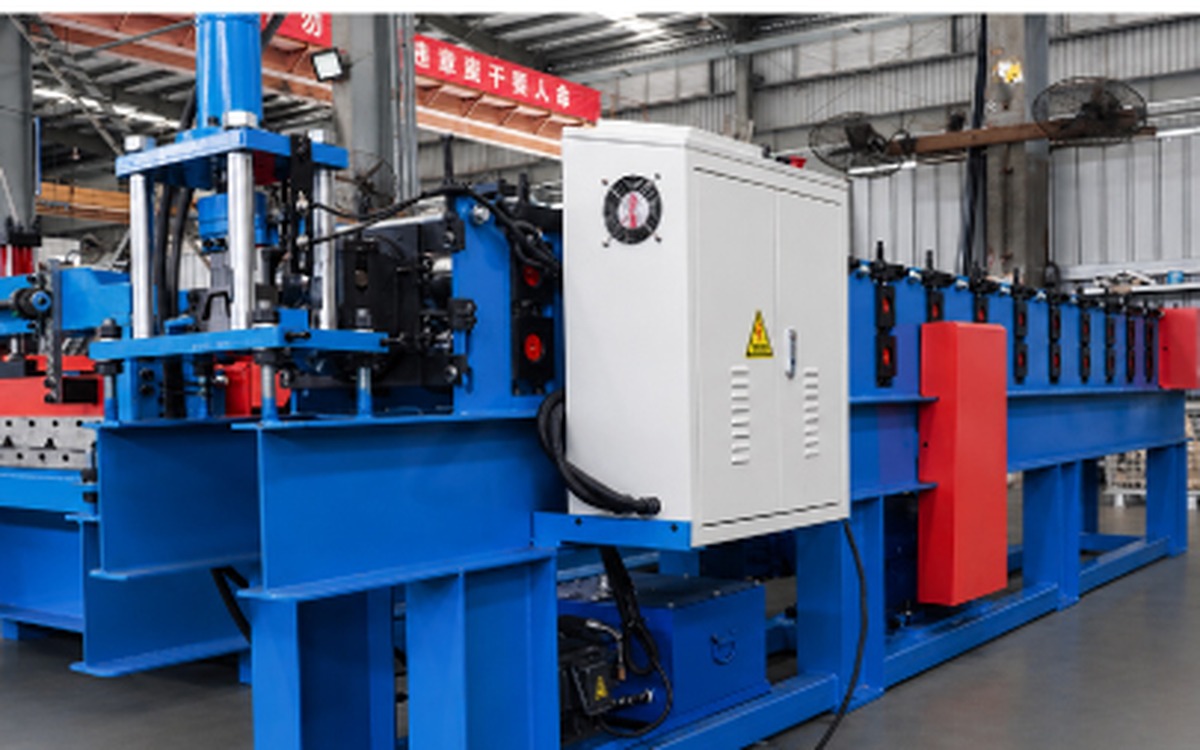
Named furring example: Our Xiamen production base publishes a HFC-45 hat/furring channel line for a galvanized-steel profile family. Its catalogue lists 0.3–0.6 mm material thickness and separate forming and embossing stations. Those figures describe that published model only; they do not establish the scope of this workshop photograph, an exposed T-grid line, or a Halcyon quotation. Request the proposed model layout and measured furring sample for your drawing.
Acceptance evidence for the proposed profiles
Mark each drawing revision and trial coil. Check the first-off and later pieces for the drawing dimensions, cut length, hole or notch placement, coating and visible edge condition. Assemble the specified mating components rather than measuring one section in isolation. Record any tooling or recipe changes between profiles and agree the sampling method before the trial.
The equipment trial can document profile geometry and joint fit for the stated material. Ceiling-system fire, acoustic, load or other building performance requires the applicable design and independent system evidence; this page makes no such certification claim.
Buyer questions
Is a T-grid machine the same as a furring-channel machine?
Not by default. Exposed T-grid members and concealed channels have different cross-sections and connection requirements. Compare their actual drawings and tooling plan.
Can one line make the main tee and cross tee?
Only if the proposed tooling and joining-slot process cover both approved parts. Ask for separate trial samples and an assembly fit check.
What should I send for a quotation?
Send drawings for each ceiling member and mating connector, steel grade, coating, thickness range, punching or slot layout, finished lengths, target output and the intended ceiling application.
For exposed grid members, see the T-grid equipment review. For a concealed omega or hat section, review the furring channel roll forming machine guide. A plain L-shaped ceiling perimeter needs a separate wall angle roll forming machine and tooling review; the perforated corner bead shown there is not proof of the same tooling. Send all mating drawings to compare the proposed line scope. Planning a complete ceiling range? See which ceiling profile lines you need.
Source and limits: Halcyon Machinery buyer-review framework, updated 29 September 2026. No universal machine range, production speed, joint certification or installed case is claimed; the exact configuration follows a production-base proposal and documented trial.