
Double Layer Roll Forming Machine
Compare two cladding profiles and the shared equipment scope before choosing one frame.
Price range: double-layer roof sheet machines
US$23,000–34,000 (standard) · US$36,000–59,000 (premium), FOB China
Standard covers the first two configuration levels (single-profile and multi-profile / quick-change); premium covers fully automatic lines.
Final price depends on profile, thickness, speed, punching and automation. Excludes freight, import duties and installation. Send your profile drawing for a quotation within 24 hours. North American configurations (480V/60Hz, UL and local requirements) are quoted separately.
Large complete lines (e.g. truck chassis beam lines or full cable tray lines) are quoted per project, typically above US$150,000.
Manufactured in our Xiamen factory · 35+ years of roll forming experience.
Get a quote for this machine
Send your profile drawing or a photo of the profile. We reply within 24 hours with a configuration and price.
Commercial terms
- Lead time
- standard machines 30–60 days; automatic and heavy-duty lines 60–120 days (confirmed in the quotation).
- Warranty
- 12 months on the machine, lifetime technical support by video and remote guidance; wear parts excluded.
- Payment
- 30% deposit; 70% before shipment, after you approve the trial-run video.
- Shipping
- FOB Xiamen, China.
When does a double-layer line make sense?
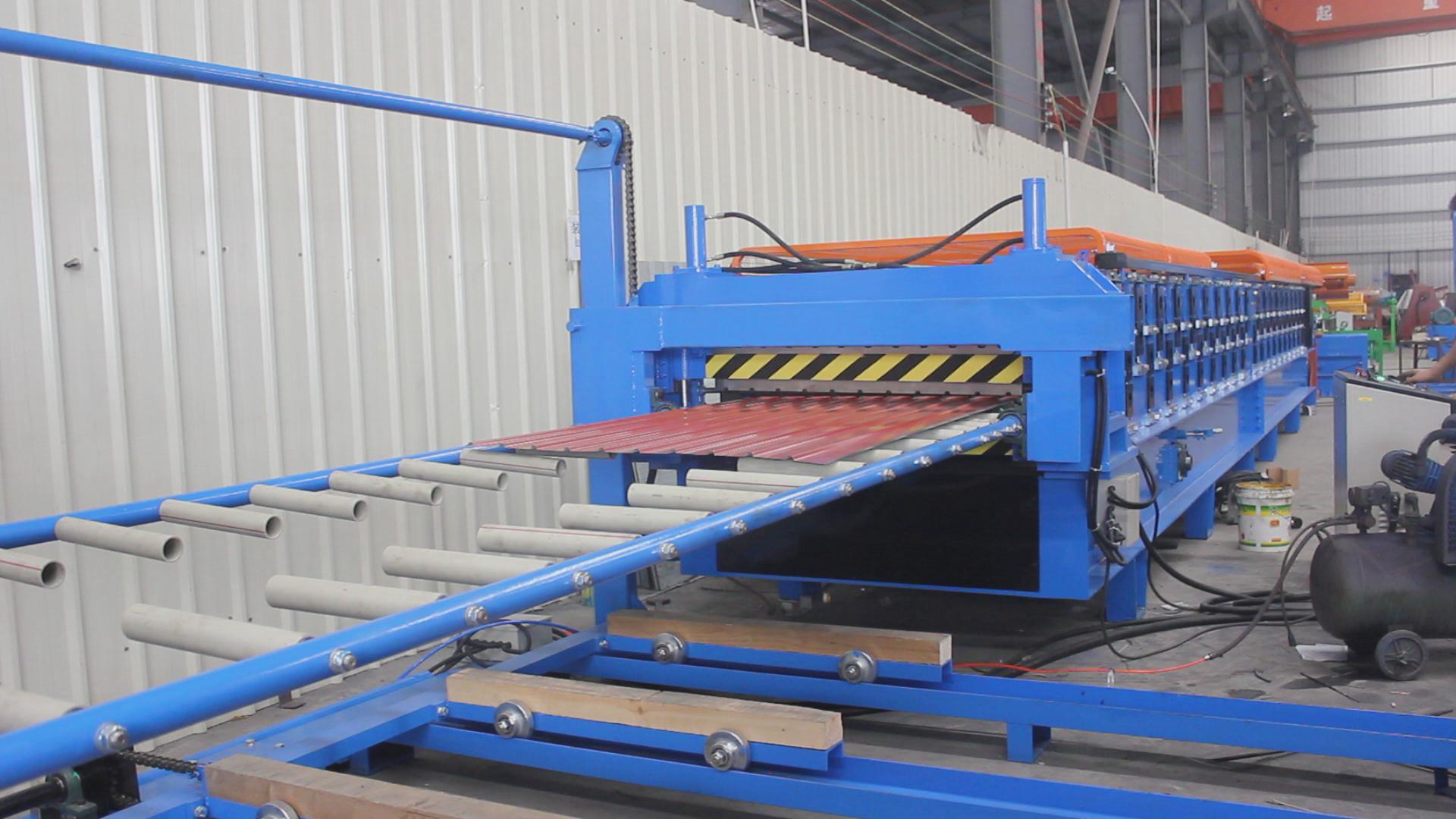
Direct answer: Compare the two approved roof or wall profiles and the order mix before selecting a shared frame. A proposed double-layer machine may share some equipment, but the actual decoiler, drive, cutting and handling scope must be stated in the quotation. Do not assume two banks can run simultaneously, or that cost and floor area are automatically halved.
- Two drawingssection geometry, effective cover, edge lap and tolerances for each profile
- Two materialsgrade, coating, thickness range and coil width for each product
- Shared scopeidentify which feeding, drive, cut and stacking modules are actually shared
- Trial evidencerun both banks separately, check first-off and repeat samples, record changeover steps
Which modules are actually shared?
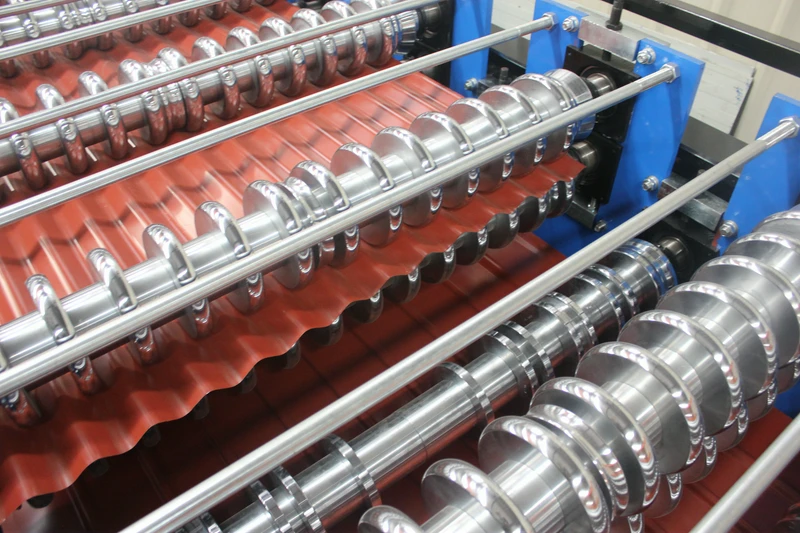
Our Xiamen production base's published double-layer example lists two feeding and guiding devices and two forming sections, alongside one hydraulic cutting system with two blades. This is a reference configuration, not proof that every proposed line has the same shared modules, material range or output. Ask for a station-by-station scope drawing and a separate accepted sample from each profile before comparing it with two independent lines.
What do the two forming levels look like?
What is the alternative?
Two separate lines may suit simultaneous roof and wall production or very different materials. Compare capital cost, floor space, operator time, maintenance access and target output with a documented production plan. See the roof and wall sheet guide and send both drawings, any punching layouts and intended weekly mix.
Send us your profile drawing
We will review your profile drawing, material, hole pattern and target output with our factory team before confirming the proposed scope and quotation.
Get a quoteHow to compare one double-layer frame with two lines
Request a written scope table for the two approved profiles. Identify separate roll sets and which decoiler, drive, cut-off, controls and run-out equipment are shared. Check access for setup and maintenance, then trial each layer with its own specified coil and drawing.
Can both layers produce at once?
Do not assume so. Ask our factory team to show the permitted operating sequence and any shared-drive or shared-discharge limits for the proposed design.
How should output be compared?
Compare the intended order mix, coil changes, setup time and measured output for each profile under agreed trial conditions. One advertised line-speed figure does not prove finished-part output.
What should the buyer send?
Send both profile drawings, material grade, coating, thickness range and coil width for each, punching layout if any, finished lengths, target output and available floor area.
Source and limits: Halcyon Machinery procurement review, updated 24 September 2026. No machine-specific output, price or simultaneous-production capability is claimed without a written proposal and trial.