
Roll Formed Section Cutting Machine: Specify the Cut and Trial
Compare stop-cut, flying-cut and saw proposals for a roll formed section using the approved drawing, material, cut-length range and trial acceptance method.
Direct buyer answer
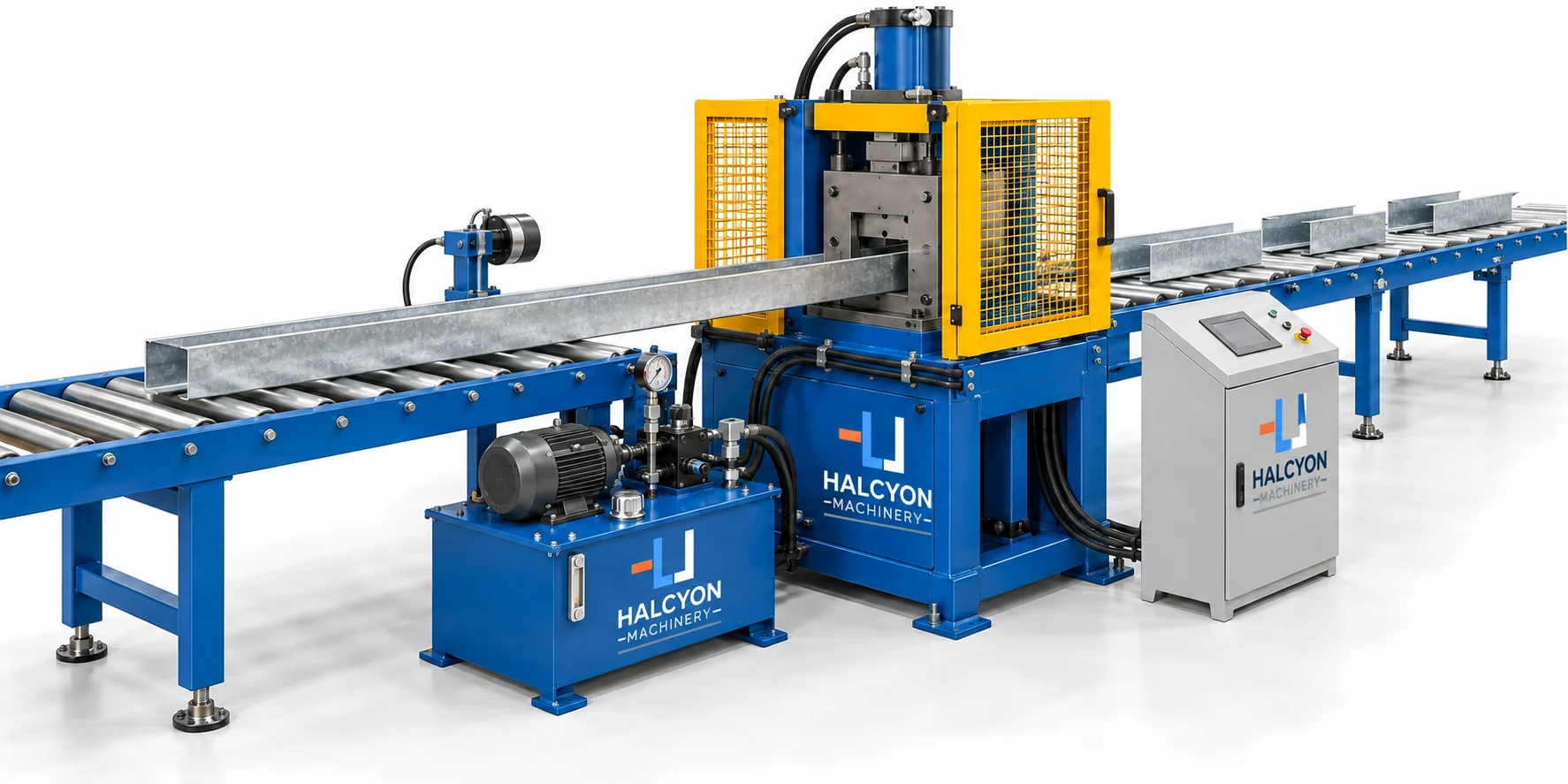
Select the cut-off from the formed profile, material, cut-length range and required line sequence. A stop-cut shear, a flying cut or a saw may be suitable, but none can be declared best from thickness alone. Ask our factory team to explain the actual machine arrangement and test it using the agreed profile and material.
Compare methods against the finished section
A stop-cut unit pauses the material feed for a cut; a flying-cut arrangement follows moving material; a saw uses a different cutting action and handling system. Their suitability depends on the section geometry, material, cut-face requirement, burr allowance, available line controls and downstream handling. A proposal should state which method is included, what stops or moves during a cut, and what interfaces are required. Do not infer cycle time or tolerance from a generic machine name.
Watch a travelling cut-off carriage
What to check in your own trial: measure finished lengths across an identified batch, record the feed speed used, and inspect cut-end squareness, burrs and deformation against the agreed drawing. A moving carriage alone is not a measured acceptance result.
Watch the 12-second Halcyon video on YouTube · Send your section drawing and cut-length range
Record a meaningful acceptance trial
- Mark the approved drawing revision, steel grade, thickness range and profile orientation on the trial plan.
- Agree the cut-length range, measurement datum, sampling interval and acceptable cut-face condition before the trial.
- Keep identified first-off and later sections; record length, squareness, burr or deformation observations and any setting changes.
- For retrofit work, document the existing controller, feed direction, guarding, available space and electrical/hydraulic interfaces before confirming compatibility.
Download a blank roll forming cut-off trial record
Compare cutting proposals using traceable measurements from the approved part. This fourteen-part record links the drawing and material to sample IDs, cut length, cut-end condition, profile support, line response, changes and the final disposition.
Download the blank cut-off trial record (TXT). Agree the measurement method and acceptance limits with our factory team before the trial. The blank form contains no test results, default tolerances, safety approval or guaranteed machine capabilities.
Keep first-off and later samples separate and record stop/restart observations. A moving cut-off carriage alone does not prove finished output or accuracy; evaluate the proposed cutting method with the actual section, controls and handling equipment.
Questions buyers ask
Does a flying cut always give a higher usable output?
No. Actual output depends on the full line, material, profile, acceleration and handling. Compare agreed trial results for the intended part.
Can a cutter be retrofitted to an existing roll former?
Possibly, after a site and interface review. The cutter, guard, controls, feed sequence and run-out need to be assessed together.
What should I send for a proposal?
Send the dimensioned profile drawing, steel grade, thickness range, punching layout, cut-length range, cut-face requirement, target output and details of any existing machine.
Review related auxiliary equipment, the cut-off station trial checklist and the factory acceptance evidence checklist, then send your section drawing.
Source and limits: Halcyon Machinery buyer-review framework, updated 2 October 2026. No specific cutting speed, tolerance, compatible retrofit or installed customer case is claimed. A machine-specific offer and trial are required.
Request a cut-off review