
By Halcyon Machinery · Technical content review · Published · Updated
Agree a bonding trial that uses identified metal skins, the selected core and the specified adhesive system, then record preparation, application and curing conditions and keep labeled panel samples with the agreed test results. A panel that looks intact at discharge does not show an acceptable bond after curing. For an equipment buyer the question is whether the offered process can repeatedly make the agreed construction under documented conditions, which is separate from whether the finished panel meets its application requirements.
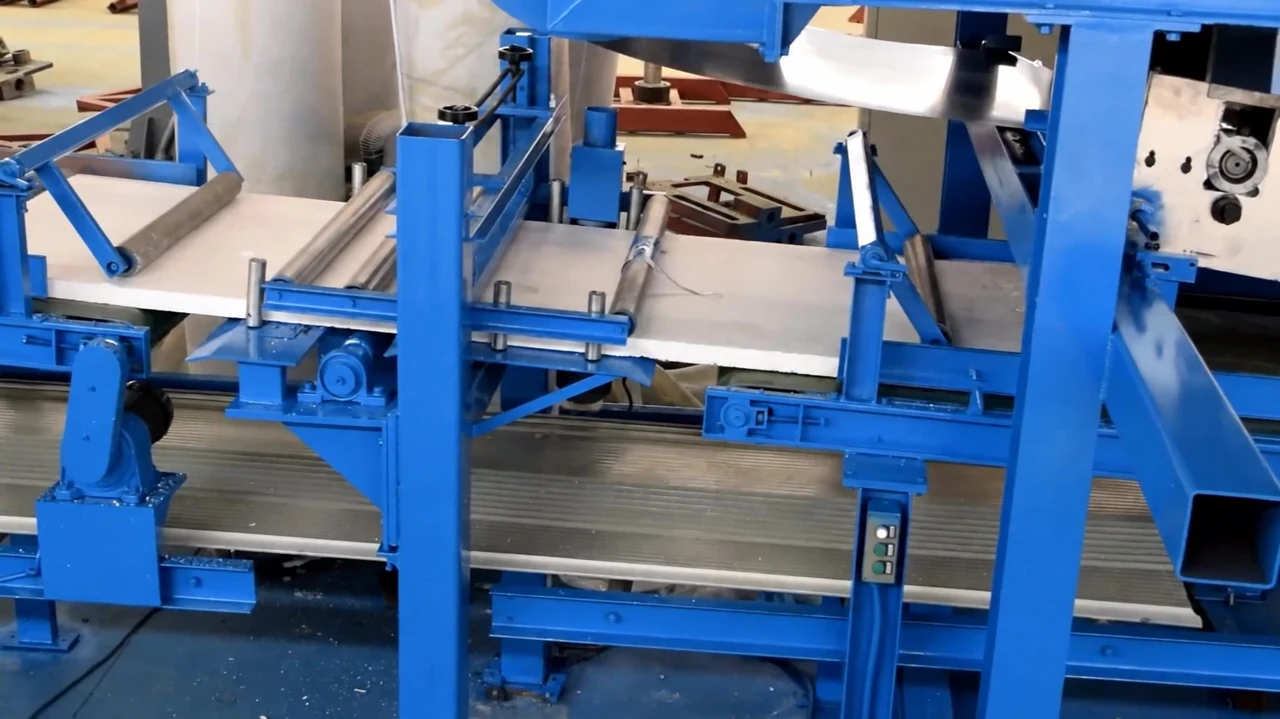
Trial record, stage by stage
| Stage | Record | What it helps resolve |
|---|---|---|
| Material receipt | Skin and core batch identifiers, drawing revisions, adhesive identity and available material documents. | Whether later results belong to the construction being purchased. |
| Surface preparation | The agreed preparation method and the condition of the surfaces to be bonded. | Whether material preparation is included and reproducible. |
| Adhesive application | Applicable mixing and application settings, the measurement method, process observations and interruptions. | Whether the proposed station and its records address the adhesive supplier's requirements. |
| Lamination and cure | Actual settings and available measured conditions, line speed, residence assumptions and post-line conditioning. | Whether discharge time is being confused with the agreed curing condition. |
| Sample review | Sample location and identity, preparation and conditioning, test method, results and agreed acceptance criteria. | Whether first-off and later panels meet the same documented trial agreement. |
Settings shown on a control screen and conditions measured on the process are different records, so note what was measured, where and with which instrument. Do not replace missing measurements with nominal catalogue values.
Fix the construction before the run
Identify both skins by grade, coating, thickness and profile drawing. State the core type, batch identity and orientation where relevant, the joint drawing, panel dimensions and the adhesive proposed for the trial, together with the adhesive supplier's current preparation, mixing, application and curing instructions. The line builder and material suppliers must confirm compatibility, and a result from one core or coating should not be assumed to apply to another.
This guide covers a bonded-core trial; in-situ PU/PIR foaming has its own chemistry and controls, so one catalogue description does not show that a line supports every core or both processes. Start from the sandwich-panel equipment scope and mark which modules are new, retained or separately supplied.
Samples, failures and the test report
Agree sampling locations and frequency before the run, including the panel areas that matter for your construction and samples after relevant stops or changes. Label first-off and later samples so their production conditions can be retrieved, and keep separate records for each construction in the proposal.
Visual review can document separation, voids at the cut edge, surface damage and joint geometry, but it does not measure bond strength. Where mechanical testing is required, the panel designer, material supplier and testing party should agree the method, specimen preparation, conditioning and acceptance criteria; do not invent a universal force, cure time or sample count. When a result falls outside the agreement, keep the original result and record the investigation, adjustment and repeat trial, separating adhesive-interface separation from core damage where the method allows.
Download the blank bonding-trial record (CSV; headings only)
One method to discuss with the testing party is ASTM C297/C297M-16(2024) for flatwise tensile testing; confirm it fits your panel construction. Ask for a report that links each specimen to its panel and material batches and names the method and edition, preparation and conditioning, test conditions, measured result, failure location where recorded, the agreed acceptance criterion and who ran the test. Keep initial and repeat results.
What the line trial can and cannot support
| Claim | Evidence needed |
|---|---|
| Equipment acceptance for the tested scope | A documented line trial with the records above |
| Fire classification, thermal performance, cleanroom suitability, weather resistance, structural load rating | Evidence for the actual panel construction and intended use; agree who is responsible for each test and document before signing the equipment scope |
Questions to resolve in the quotation
Does the skin roll former control the complete bond?
No. Core preparation, adhesive application, lamination, curing and inspection are separate process responsibilities. Name the included modules and the interfaces to retained equipment.
Can I approve the line from a photograph of a finished panel?
A photograph can show visible condition. It cannot replace identified trial materials, recorded process conditions and the agreed sample tests.
What should I send for a proposal?
Send skin and panel drawings, material and core specifications, the proposed bonding process, panel sizes, target accepted output, retained equipment details and destination requirements. Include your trial and testing requirements, or identify which remain to be agreed.
Send the panel construction and trial requirements and we will review the scope with our factory team before confirming an offered configuration.
Sources
The reference photograph comes from our Xiamen production base's 2023 XPS/EPS line article; its catalogue claims about finished-panel performance, automation and other core processes are not adopted here. JINGGONG's published cleanroom rock-wool line description names glue application and double-belt heating as production modules; it is an independent manufacturer's process example, not a Halcyon configuration. The trial record above is a proposed buyer-review framework, not a report of a completed Halcyon factory trial.